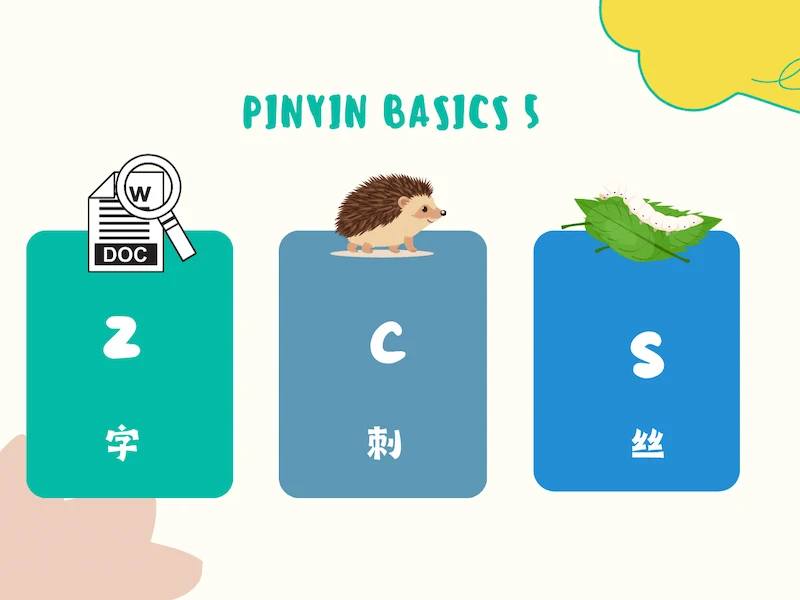
How to Pronounce Z, C, S in Chinese
z — like "ds" in "kids," unaspirated
The pinyin z is NOT the English z in "zoo." It sounds like the "ds" at the end of "kids" — a short, unaspirated affricate. The tongue tip touches the back of the upper teeth, then releases with no puff of air.
c — like "ts" in "cats," with strong aspiration
The pinyin c is the aspirated partner of z. It sounds like the "ts" in "cats" — but with a stronger puff of air. The z/c contrast follows the same aspiration rule as b/p and d/t.
s — like English "s" in "sun"
The pinyin s is the easy one — almost identical to the English s in "sun." Tongue tip near the upper teeth, air hisses out, no surprise.
Z C S Practice Words
| Chinese | Pinyin | English |
|---|
| 在 | zài | at / in |
| 字 | zì | character / word |
| 菜 | cài | dish / vegetable |
| 从 | cóng | from |
| 三 | sān | three |
| 岁 | suì | years (of age) |
Z C S vs ZH CH SH: The Big Beginner Trap
The most common mistake with z c s in Chinese is confusing them with their retroflex counterparts zh, ch, sh. The difference is tongue position: z c s keep the tongue flat behind the upper teeth, while zh ch sh curl the tongue back toward the roof of the mouth. Listening drills with minimal pairs — 字 (zì) vs 至 (zhì), 草 (cǎo) vs 吵 (chǎo) — are the fastest way to train your ear.