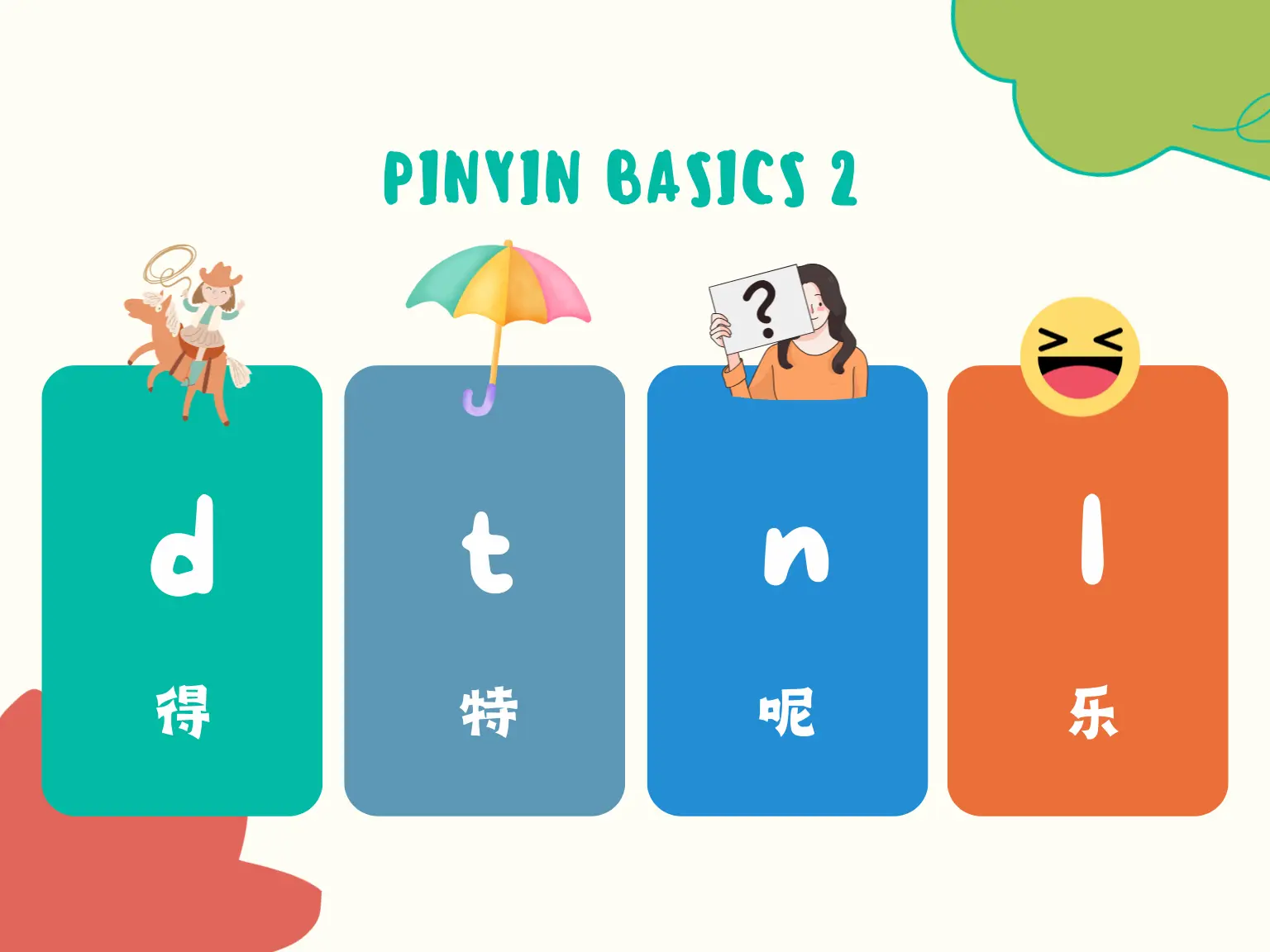
How to Pronounce Each Initial
d — unaspirated, like English "stop"
The pinyin d is unaspirated. It is closer to the d in "stop" than the d in "dog" — no puff of air should escape. The tongue tip touches the ridge behind the upper teeth.
t — aspirated, with a clear puff of air
The pinyin t is the aspirated partner of d. Hold a tissue or your hand in front of your mouth — you should feel a strong burst of air. The d/t pair is the most important contrast in this group.
n and l — almost identical to English
The pinyin n matches the English "n" in "no." The pinyin l matches the English "l" in "love." These two are the easiest DTNL sounds and rarely cause beginner confusion.
Practice Vocabulary
| Chinese | Pinyin | English |
|---|
| 大 | dà | big |
| 弟弟 | dìdi | younger brother |
| 听 | tīng | to listen |
| 天 | tiān | sky / day |
| 你 | nǐ | you |
| 牛奶 | niúnǎi | milk |
| 来 | lái | to come |
| 老师 | lǎoshī | teacher |
Common Mistakes
- Pronouncing d like English "d" in "dog" — too voiced. Mandarin d is voiceless and unaspirated.
- Forgetting aspiration on t. If your t and d sound identical, you are missing the puff of air on t.
- Confusing n and l at the start of a syllable. This is more common for speakers of southern Chinese dialects than English speakers — practice 你 (nǐ) vs 里 (lǐ) side by side.
- Touching the tongue too far back. This is a tongue-TIP sound — the contact point is right behind the upper teeth, not the roof of the mouth.
Next Pinyin Initials to Learn
With BPMF and DTNL mastered, the next group is GKH (g, k, h — sounds made at the back of the mouth). After that come the sibilants ZCS, JQX, and finally the retroflex ZH CH SH R. Each new group introduces one new tongue position.